The Group

Group Members
Principal Investigator

Andreas trained in medicine and received his medical license from the University of Bern, Switzerland. In 2010 he obtained an MD in medical oncology from the University of Bern and in 2014 a PhD in molecular cancer research from EPFL. After a postdoctoral fellowship in the Itzkovitz lab at the Weizmann Institute in Israel, he joined the University of Zurich as SNSF Eccellenza Professor and founded the Moor lab at the beginning of 2019. In June 2020 the lab moved to the Department of Biosystems Science and Engineering (D-BSSE) at ETH Zurich and Andreas was appointed as tenure-track assistant professor of Systems Physiology.
Scientist, Lab Manager

A big time molbio geek. Always on the quest for the proper technology for the right question. Strong advocate of hypothesis-driven reasoning.
Lab technician

To convert from economics to science, to bath in the Swiss-Moroccan Tagine made with family, sport, friends.
Project Leaders

Xenia is an "Established Researcher" (Oberassistent) who joined the group in 2022. She earned her BSc and MSc in Molecular Medicine before completing her PhD in Immunology at the University of Berne in 2019. Additionally, she is a PMI-certified Project Management Professional. Her original expertise lies in intravital imaging, cell migration, T cell memory, and chronic infections. Since joining our team, she has broadened her scope to include key lab interests such as oncology, spatial transcirptomics and cell-cell interaction.

Tomas is a acientist with a long‑standing passion for biology, inspired already in high school. He enjoy thinking deeply about scientific problems, discussing new ideas, and designing experiments that reveal how cells make decisions to keep multicellular organs functional.
His research focuses on understanding the mechanisms that control cell fate and cellular communication—what makes each cell unique, how these identities change, and how they become disrupted during cancer development.
Postdocs

Immunologist originally from Poland, dissecting spatial niches within pancreatic cancer to identify its vulnerabilities, experiencing the world through travelling and getting to know different cultures, reflecting through photography, painting and dancing.

Having experienced many different omics analyses, now tackling computational challenges in spatial and single cell transcriptomics. Enjoys all kind of puzzles, and always accepts cookies; both virtually and physically.

Love RNA. Interested in figuring out how they dress up and move around to end up where they do. From India, so an obvious passion for music and food.

Andromachi is a scientist with a background in Neuroscience and Vascular Biology who joined the group in 2023. With a diploma in Molecular Biology and Genetics from Democritus University in Greece, she completed her doctoral studies in Molecular Neuroscience at Ludwig-Maximilians-University in Munich. She then moved to Heidelberg University to study the crosstalk between neural stem cells and their vascular niches in health and disease. Passionate about how cells “talk” to each other, Andromachi currently collaborates with Pattern Biosciences on an Innosuisse project, pioneering a novel gene therapy for colorectal cancer liver metastasis using mouse models of disease, organoids, gene delivery and transcriptomics.

Ben studied at the University of Vermont, where he received his Bachelor of Science in Animal Science in 2014. Following his undergraduate degree Ben spent several years working for the United States Department of Agriculture in a veterinary diagnostics laboratory. In 2019 he started a Ph.D. in cancer biology at IFOM ETS - the AIRC Institute of Molecular Oncology in Milan, Italy. After being awarded his Ph.D. in 2023, Ben joined the Moor lab at the ETH Zurich where he works with an industry partner, Pattern Bioscience, to develop a novel gene therapy for colorectal cancer liver metastasis. Ben’s research interests are focused on understating how tumor intrinsic and extrinsic factors contribute to metastatic growth.

Sam graduated from the University of Edinburgh in 2017 with a BSc with honours in Biological Sciences. He then moved to Vienna where he worked with conditional and mosaic genetic mouse models in the context of adult stem behavior during his PhD at the Institute of Molecular Biotechnology. In 2024 Sam joined the Moor lab with the aim of using genetic screening and multimodal profiling approaches to better understand cancer progression.

Jan joined the Moor lab as a PhD student in 2020, after he obtained his M.Sc. in Molecular and Cellular Biology at Heidelberg University (Germany). His research focuses on memory B cell biology and antibody engineering. Jan successfully defended his PhD in 2025, and has since worked in the lab as a PostDoc.

Mapping the spatial chaos of tissues into structured embeddings. I spend my days converting biological noise into signal and my nights wondering if my own consciousness is just a poorly tuned hyperparameter.

Tanay is an MD-PhD that joined the Moor Lab as MedLab fellow with the goal to extend his knowledge about mucosal border biology towards the spatial realm.


PhD students


Trained as a multidisciplinary scientist, now focused on the complexity of cellular interactions in disease contexts. I am very interested in learning complex communication networks and how they shape their environment through CRISPR screens. Originally from a mediterranean city, I traveled north to the grey skies of the Netherlands, where I did my Bachelor and Master studies in cellular biology. I joined the lab at the end of 2020 as a master student to study mRNA dynamics. Took on my PhD studies in 2022 knowing cancer is a heavy issue that I’d like to help tackle. Still searching for the answer to everything, which might not necessarily be 42.

Physician turned researcher, interested in all things related to lymphoma. Will try to consolidate snowboarding and cross-country skiing with living in Basel.

Hailing from the tiny village of Saundersfoot in Wales, I embarked on an academic adventure that took me to the slightly bigger town of Exeter, where I studied for a Bachelor’s in Medical Sciences, and then to the slightly bigger town of London where I continued my studies for a Master’s in Bioengineering. My professional journey led me to the Francis Crick Institute as a Laboratory Research Scientist, where I honed my skills as a neuroscientist. Currently, after moving to slightly bigger mainland Europe and a small jump in field, I'm a PhD student exploring liver metastasis, cell-cell interactions, cellular plasticity, and neurotrophins. When I’m not immersed in science, you’ll find me cycling, running, snowboarding, eating or scrolling my beloved Ricardo.

Many years of lab and science hopping as part of my masters journey lead to a big fascination for fluorescence microscopy and its applications in studying diseases. After receiving my masters’ degree in Molecular Biotechnology from Heidelberg University in 2022, I joined the lab at the end of 2023 to study the complex spatial biology of the gut in patients with inflammatory bowel disease.

Trained as a methodology-driven bioengineer, Jay enjoys venturing into biologically grounded hypotheses and embracing the uncertainty that comes with discovery-driven research. He received his Bachelor’s degree from Peking University and his Master’s degree from EPFL. His research interests lie at the intersection of DNA/RNA biology, single-cell functional assays, and advanced imaging approaches, with a focus on in vitro biological models. Beyond research, Jay enjoys reading nerdy jokes, handcrafting memes, and snow sports.

Studies how and why cancer spreads through the body, drawn to the old "seed and soil" idea that where a tumour takes root depends as much on the soil as on the seed. Gets at the question with organoids, in vivo screens, and spatial proteomics. Outside the lab, almost always has something playing on Netflix.
Student Assistants

Master students

Ligia Martinez

Martina Guadagno

Yara Roth

Janis Krug

Fabienne Steiner

Matilde Vitali
Alumni
Christiane König (2019, Lab manager)
Karelia Vélez (2019-2020, Lab technician)
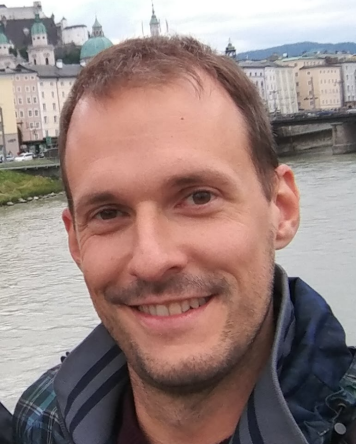
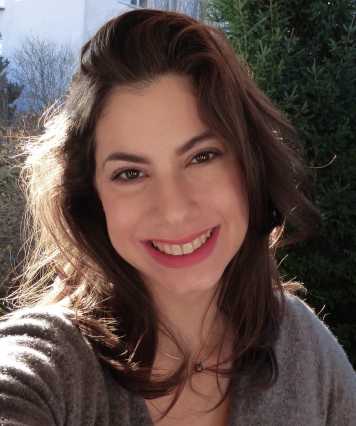
Laura De Vargas Roditi (2020-2021, Postdoc)
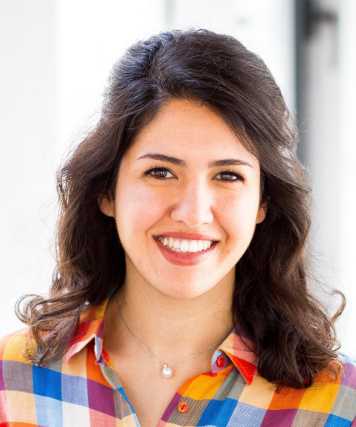
Atefeh Lafzi (2020-2022, Postdoc)
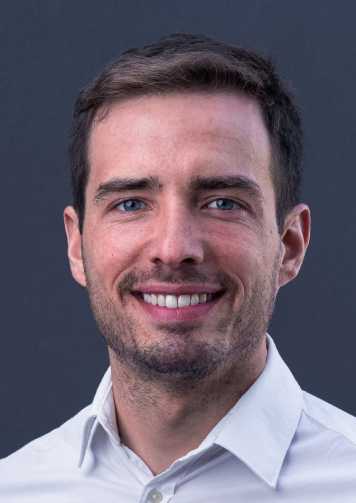
Karsten Bach (2022-2023, Postdoc)
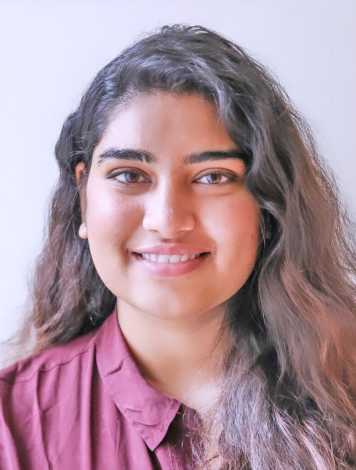
Pragya Nagar (2022-2023, Master Student)
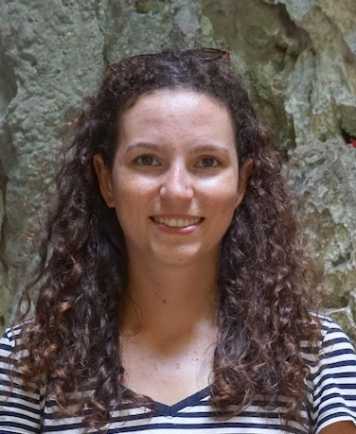
Kristina Handler (2019-2023, PhD student)
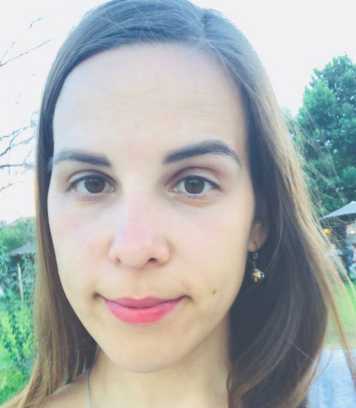
Elena Melnik (2022-2024, Scientific Assistant)
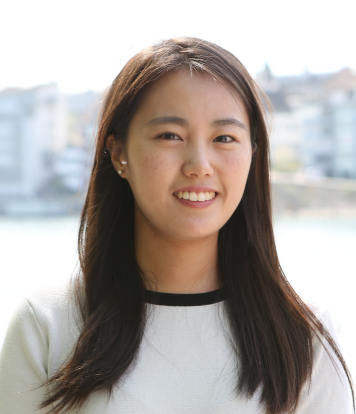
Minkyoung Lee (2019-2024, PostDoc)
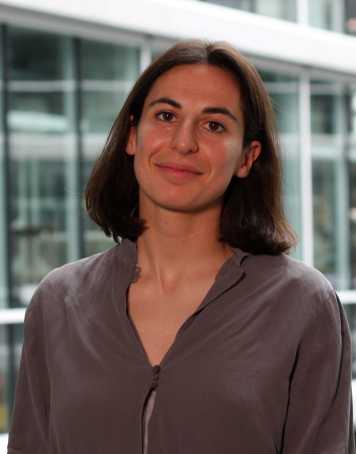
Costanza Borrelli (2019-2024, PhD student & PostDoc)
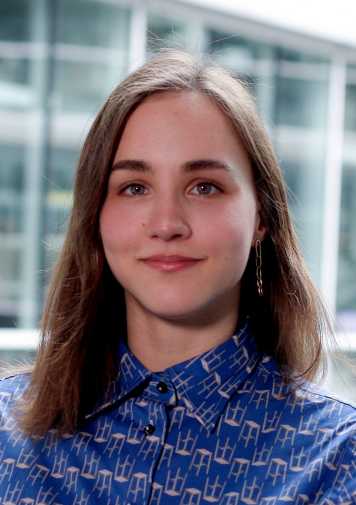
Maria Repson (2023-2024, Master student)
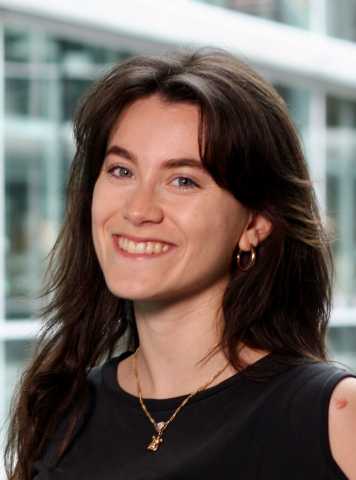
Greta Bordin (2024, Master student)
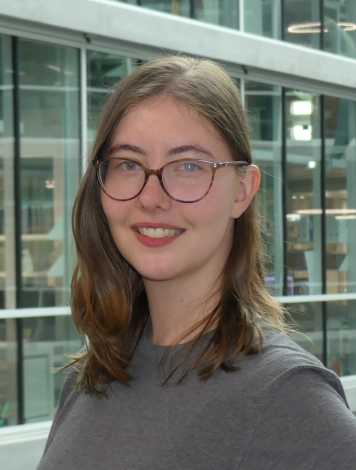
Emese Klug (2024-2025, Master student)

Eugenio Gentile (2024-2025, PhD student)

Konstantina Vlachaki (2024-2025, Master student and Research Assistant)

Lynn Arab (2025, Master student)

Gabriela Gonzalez Blancarte (2024-2026, Master student)

Mariangela Palazzo (2025, visiting PhD student)

Maribel Schneider (2025-2026, Master student)

Simona Baghai Sain (2020-2026, PhD student)

Kaolin Berneiser (2025-2026, PostDoc)

Daniel Dominguez Azorin (2023-2026, PostDoc)

Michèle Bennek (2026, Master student)

Lydia Tsocha (2026, Master student)

Antonello De Bari (2025-2026, Master student and Scientific Assistant)

Ajai Jayakumar (2026, Master student)
